
Aftercare timeline
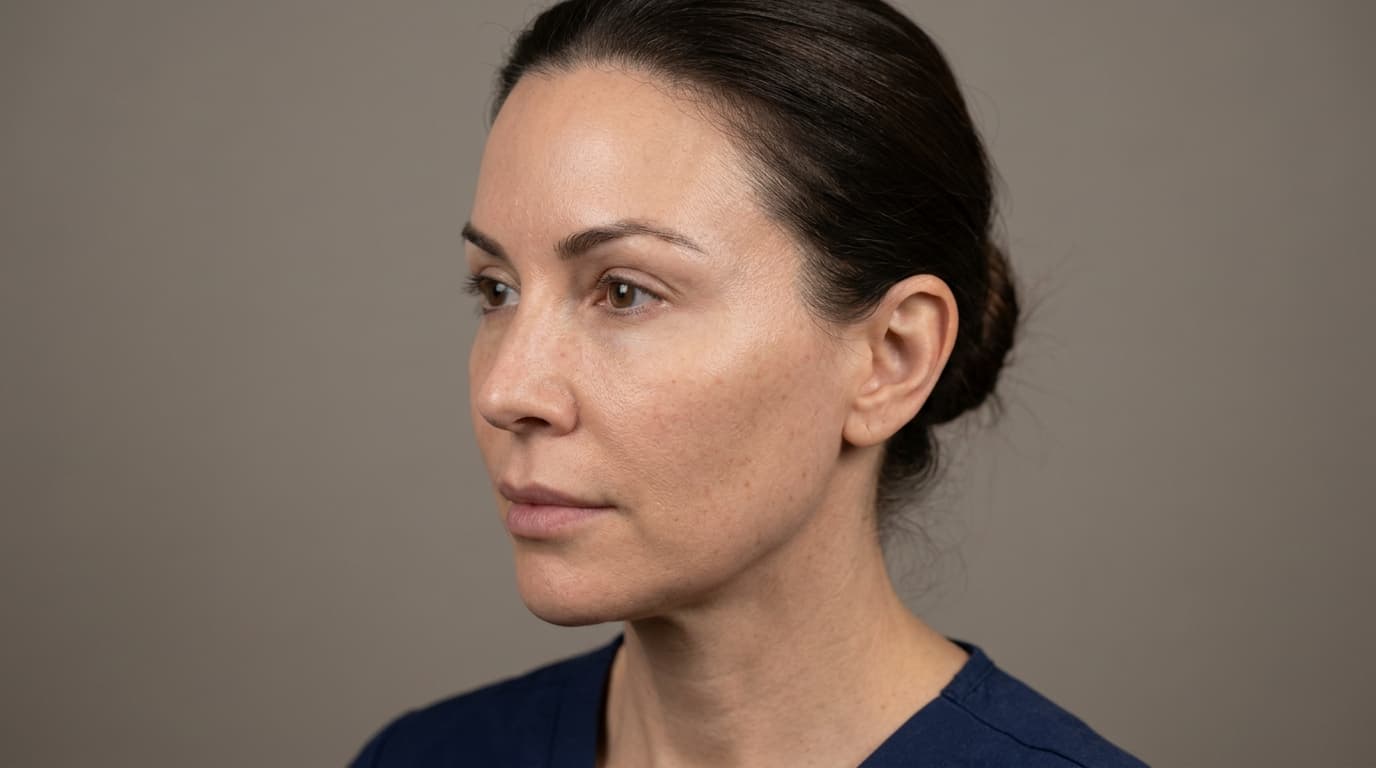
How Thread Lift Is Performed
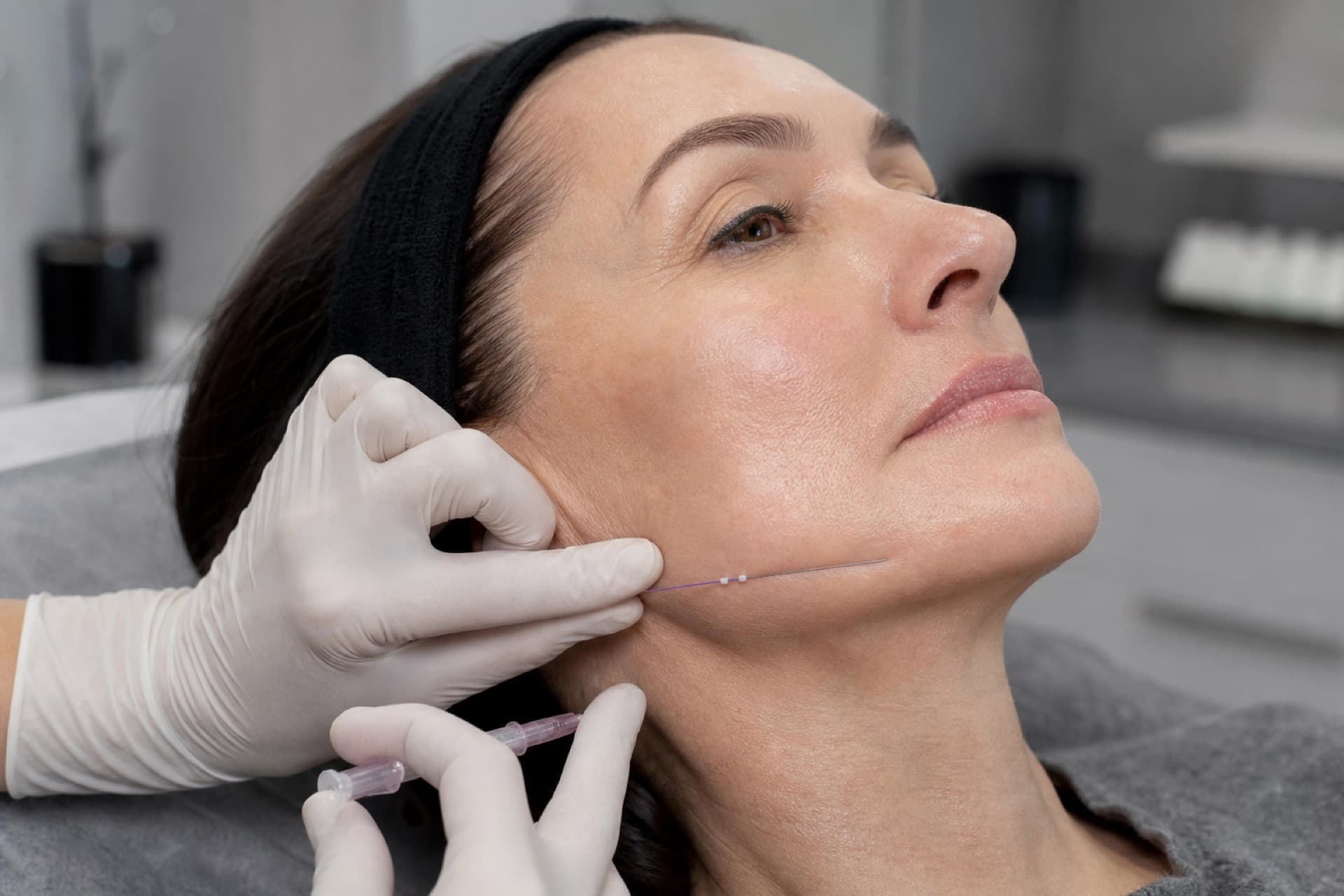
Subcutaneous Vectors & Absorbable Suture
Thread Lift
- Vectors that carry tissue — not a skin pull
- Early-to-moderate ptosis only
- Absorbable thread — not a permanent foreign body
- Does not replace a deep-plane facelift
A thread lift places PDO, PLLA or PCL threads at the subcutaneous fat–SMAS interface to combine mechanical suspension with regional collagenesis. Barbed (cog) threads grip tissue; smooth threads are mainly biostimulatory. Candidacy is limited to firmer skin, mild-to-moderate jowl and decent bony support. A heavy neck, marked skin excess and a deep-plane indication will not be corrected with threads. Effect is typically 12–18 months; surgical longevity is not promised.
Personal consultation
Muscle, volume and skin quality are assessed together; product, dose and indication are planned individually.
Procedure at a glance
A subcutaneous suture vector — not SMAS surgery
Absorbable threads (polydioxanone PDO; poly-L-lactic acid PLLA; polycaprolactone PCL) hydrolyse. PDO absorption takes months; PLLA/PCL claim a longer foreign-body and collagen stimulus. Cog (barbed) threads lock in one direction and carry soft tissue along a vector; screw-type threads may give a local sense of volume. Mechanical suspension is visible early; later, regional fibrosis and neocollagenesis are described as a quality contribution. That is not the biomechanics of releasing ligaments in the deep plane and sewing SMAS into a youthful position. Pulling skin alone leaves dimples, a ‘cheese-wiring’ look and short life; a correct plan travels over fat compartments and retaining ligaments.
- 01For Dr. Hasan Kara threads are a bridge in early ptosis — not delaying makeup on a surgical candidate
- 02Permanent facial sutures sit outside this protocol
Aftercare timeline
Risks and Safety
- 01Swelling, bruising, temporary asymmetry
- 02Dimpling / puckering
- 03Visible or palpable thread
- 04Extrusion (a thread end presenting)
- 05Infection or granuloma (rare)
- 06Nerve irritation, smile change (rare)
The right indication, anatomical planning and careful technique reduce complication risk.
Procedures
- 01
Midface / jowl vector
Zygomatic and mandibular vectors for mild jowl and malar soft tissue — they do not repair torn ligaments.
- 02
Brow / temporal
Limited suspension of lateral brow and temporal soft tissue — less predictable than an endoscopic or gliding brow lift.
- 03
Neck threads
Support for mild platysma and skin quality; turkey-neck and skin excess need a neck lift.
- 04
Smooth-thread biostimulation
Little suspension claim; a grid for dermal quality. It should not be confused with mesotherapy or PRP.
Frequently Asked Questions
Ready to start your journey?
Book a private consultation with Op. Dr. Hasan Kara.