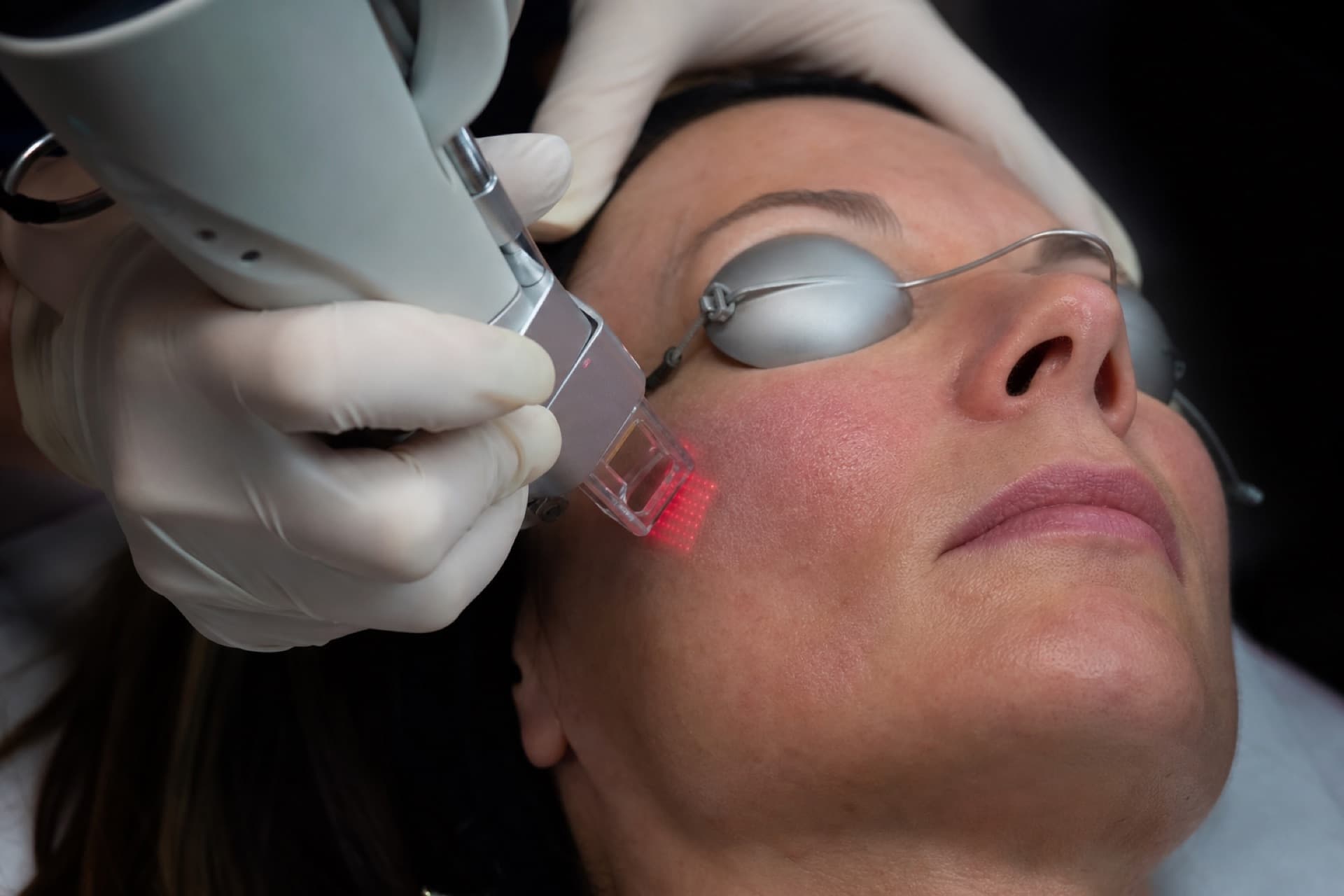
A laser is a chosen wavelength interacting with water or pigment chromophore to produce controlled thermal injury. Subsequent wound healing reorganises collagen. That is the physics on our laser-resurfacing page — not a ‘tightening with light’ slogan.
Ablative, fractional, non-ablative
CO₂ and Er:YAG vaporise water; the surface peels, dermal heat is high, downtime is long, effect on scars and photoageing is strong. Fractional scanning leaves intact bridges between micro-zones; re-epithelialisation takes days. Non-ablative bands spare epidermis more; a series of sessions, moderate textural gain. IPL is polychromatic light used for pigment and redness, not classic resurfacing.
Collagen matures over 3–6 months. There is no one-session miracle.
Phototype and PIH
In Fitzpatrick IV–VI, melanin shares energy in the epidermis; post-inflammatory hyperpigmentation (PIH) and hypopigment risk rise. Aggressive IPL and deep ablation in this group need conservative parameters or another modality. A test patch, waiting out a tan and three months of strict SPF are part of the protocol.
Safety list
- HSV history or perioral/periorbital ablation: antiviral prophylaxis
- Eye protection is mandatory
- Recent isotretinoin: wound and scar risk; interval is physician judgement
- Keloid history: a warning against aggressive ablation
- Elective energy is deferred in pregnancy
The surgical limit
Upper-lid dermatochalasis, jowls and platysma sit beyond what thermal contraction can claim. Blepharoplasty and facelift are structural tools. Laser can later be planned for leftover photoageing and scar quality. Conversely, a patient whose only problem is texture and pigment is not sold a lift.
In short
Laser is chromophore physics and wound healing. Skin type sets the parameters. Excess skin is still the knife’s work.